
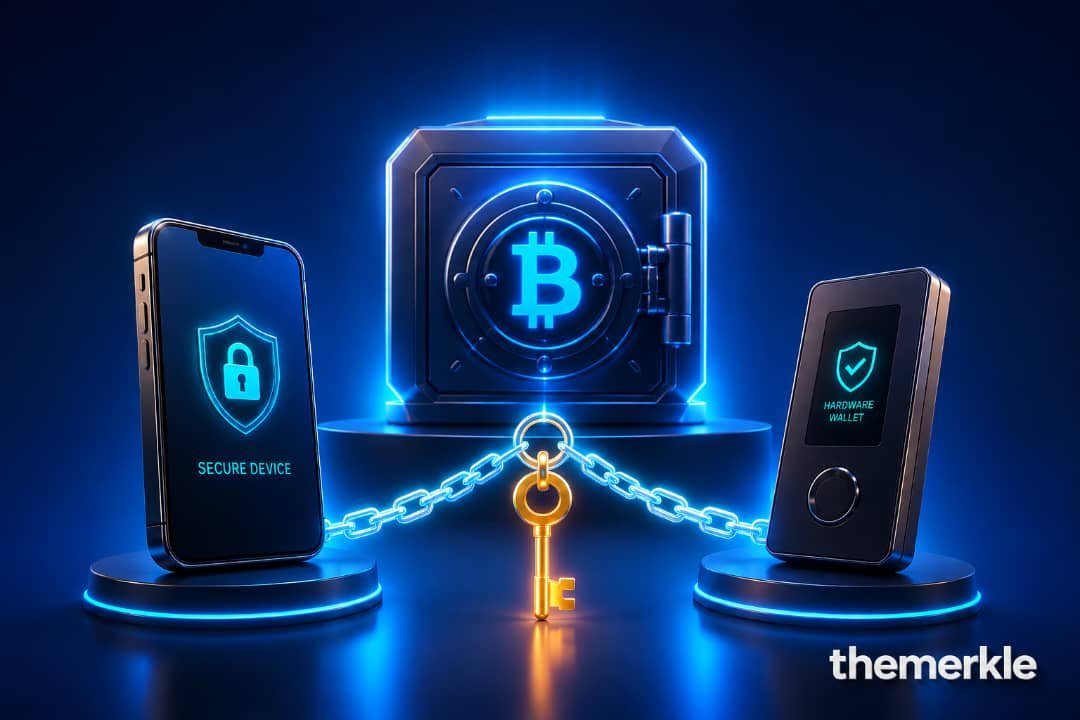
Everyone covering ZachXBT’s hardware wallet comments this week is stuck on the same question: which device is safer, a Ledger or an iPhone.
I think that’s the wrong question entirely. The one nobody’s asking is what happens to that crypto the day you’re no longer the person who needs to access it.
ZachXBT posted on Telegram that he doesn’t trust current hardware wallets for signing critical transactions or storing large amounts of crypto, recommending a dedicated iPhone instead, one used for nothing but crypto management. He aimed his sharpest criticism at Ledger, arguing that constant Ledger Live updates keep disrupting basic functions without any real benefit to users.
A Single Device, A Single Point Of Failure
Here’s what I keep circling back to. A dedicated iPhone used solely for crypto is a clean idea on paper, but it concentrates everything, key storage, transaction signing, recovery information, onto one physical object that only one person understands how to operate. Hardware wallets, whatever their flaws, were built around a seed phrase model specifically designed for continuity: something that can be written down, secured, and handed off if the original owner isn’t available.
A phone-only setup breaks that model quietly. Unless someone documents the exact configuration, tests the recovery process, and shares it with a person they trust, that iPhone becomes a vault only one person on Earth knows how to open. I think that’s a bigger risk than any Ledger Live update bug, and almost nobody covering this story mentioned it.
The Incidents Behind The Timing
This debate didn’t emerge from nowhere. A fake Ledger Live app slipped onto the App Store in April and drained $9.5 million from victims before it was caught. In January, a single person lost $282 million in a hardware wallet social engineering scam, one of the largest individual thefts on record. ZachXBT’s argument isn’t that hardware itself is broken. It’s that the ecosystem surrounding it, the apps, the impersonation risk, the phishing surface, keeps failing people again and again.
He’s also been clear that this is advanced-user guidance, not a mass migration plan. I think that caveat matters more than it got credit for. Advanced users are exactly the people most likely to already have a documented recovery plan in place. Everyone else following this advice without one is quietly signing up for the same single point of failure I’m describing, just wrapped in a different device.
What The Security Community Actually Debated
The reaction has been active, and the most useful pushback came from, where a security-focused user agreed that the hardware wallet experience today genuinely sucks, with regular UI updates and software changes breaking basic functionality often enough to make the whole experience frustrating.
They mentioned leaning away from Ledger toward Trezor for that reason, while admitting Trezor isn’t perfect either.
What stood out to me most was their point about what a hardware wallet actually protects against beyond offline storage: the ability to confirm that what you’re signing on an internet-connected device matches exactly what shows up on the wallet’s own screen. That verification step is the part a single-device setup gives up entirely, and I think it deserves more attention than the brand-versus-brand argument that dominated most of this week’s coverage.
Recovery Planning Most People Skip Entirely
If someone does follow ZachXBT’s advice, the recommendation to use an iPhone rather than Android makes sense given Android’s more fragmented security landscape. Storing seed phrase backups offline, rather than as screenshots sitting on the very device used to transact, remains essential no matter which setup someone picks.
But none of that addresses the harder question. Where does that seed phrase backup actually live. Who else knows it exists. What happens if the phone is lost, damaged, or its owner is simply unavailable for an extended period. Using a separate, dedicated device for trading is a strong security habit on its own, and sticking to it puts someone ahead of most crypto holders. It just isn’t a substitute for a documented plan that outlives the original owner’s ability to operate that device personally.
The Mobile Verification Gap
There’s a smaller but related point worth raising: smaller mobile interfaces often show less information during a transaction than a desktop screen does, making it easier to miss a phishing site or a mismatched address. A laptop setup tends to give more visible context during signing, even though mobile remains the default for most people day to day. That gap compounds the single-point-of-failure problem, since a phone-only setup is now carrying both the custody risk and the reduced-visibility risk at once.
Why This Debate Needed A Harder Question
ZachXBT’s advice makes sense for a security researcher who understands exactly where his keys live and how to recover them. It makes far less sense for anyone who hasn’t also written down, tested, and shared a recovery plan with someone they trust. The real question this debate should have raised isn’t which device is safer today. It’s what happens to this money the day you’re not the one who needs to access it.
That’s the part self-custody culture still hasn’t solved, and I think it deserves just as much attention as whichever brand of hardware wallet is currently out of favor.
Disclosure: This is not trading or investment advice. Always do your research before buying any cryptocurrency or investing in any services.
Follow us on Twitter @themerklehash to stay updated with the latest Crypto, NFT, AI, Cybersecurity, and Metaverse news!