
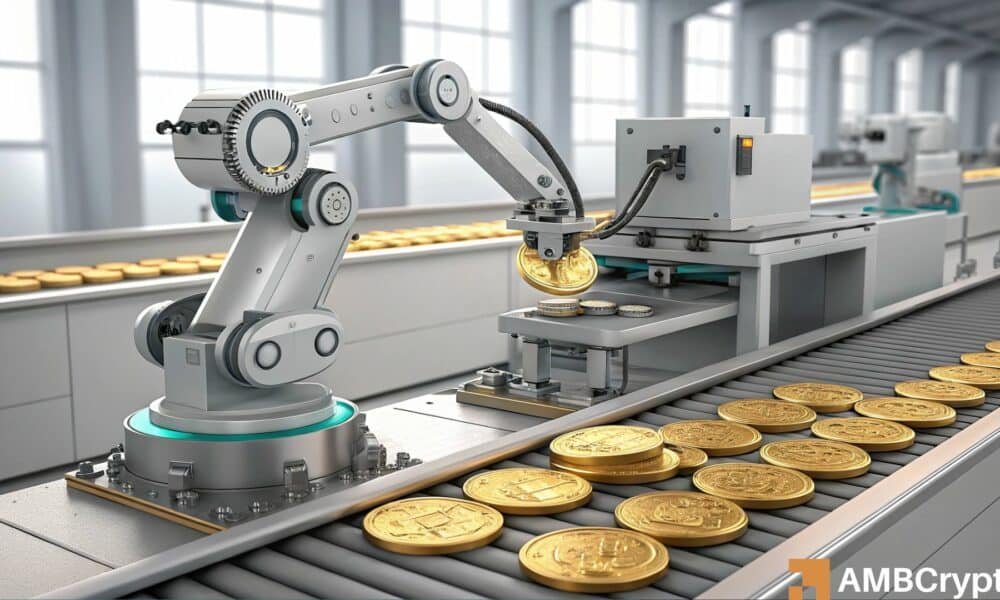
Something new is bubbling up where artificial intelligence and blockchain collide – AI computing tokens. Forget thinking of them as just another cryptocurrency to trade. These digital assets are the actual fuel for a new kind of decentralized AI.
A close look at frontrunners like Bittensor (TAO), Render (RNDR), and Akash Network (AKT) shows a tectonic shift in how we buy and sell computing power, putting them in a class of their own. Far from traditional AI stocks or other crypto assets.
At their heart, these tokens are the local currency for online platforms that let anyone rent out their computer’s processing power. This model completely flips the script on centralized giants like Amazon Web Services or Google Cloud, offering an open, and usually much cheaper, way to get things done.
Major players and their game plans
While they share a vision, each of the top AI projects is tackling a different piece of the puzzle –
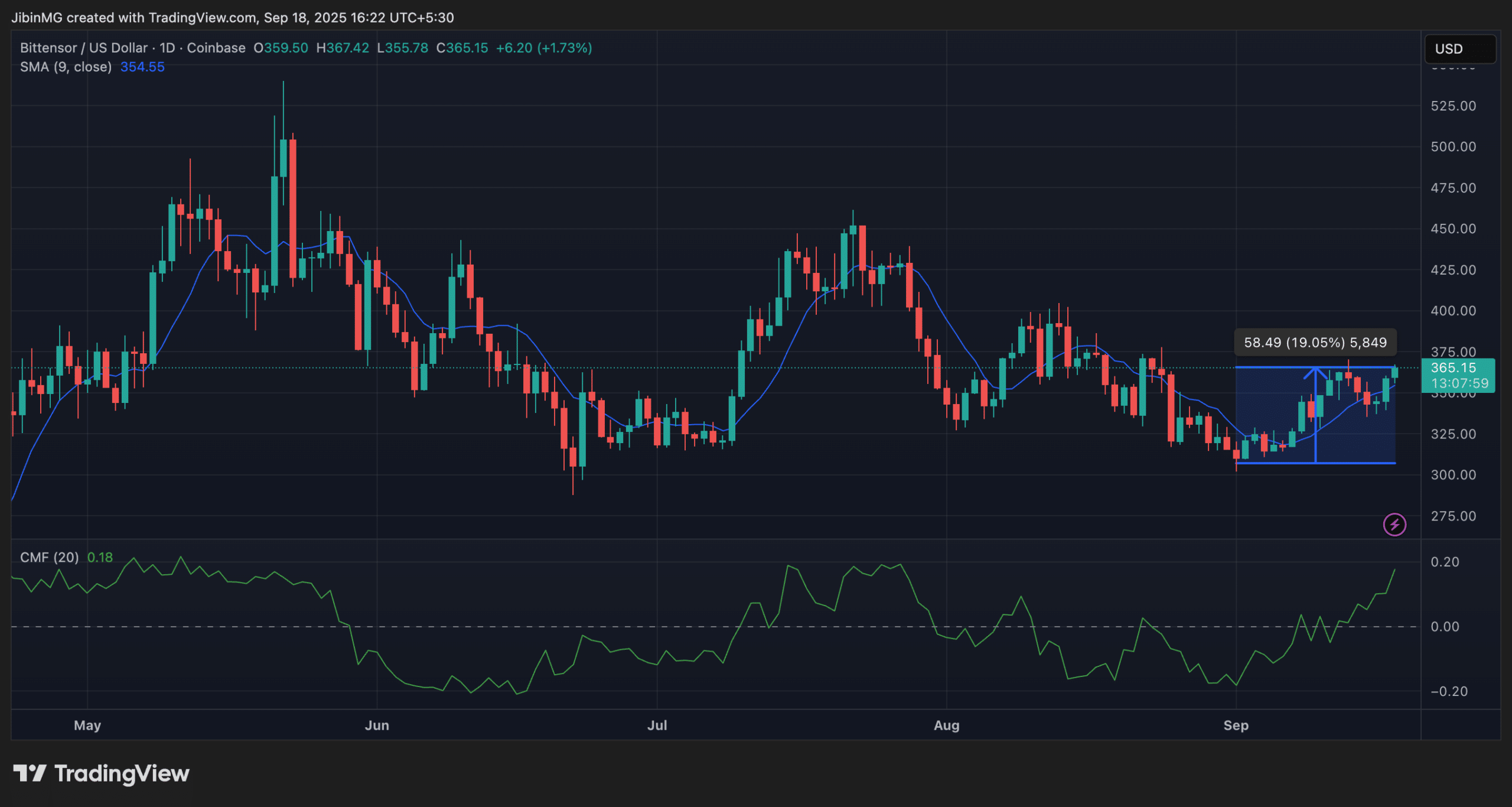
- Bittensor (TAO) – Bittensor isn’t just about renting hardware; it’s a competitive arena for machine learning models themselves. AIs on the network are paid in TAO based on how useful their answers are to the collective. A unique voting system, Yuma Consensus, lets validators rank the models, so the smartest and most effective ones get rewarded. The entire network is divided into “subnets,” each specializing in a certain skill, like generating human-like text or sifting through data, effectively creating a stock market for digital brainpower.
Source: TAO/USD, TradingView
- Render (RNDR) – Render goes after the massive need for GPU power, which is critical for everything from Hollywood special effects to training new AI. The network connects people who need that horsepower with a worldwide web of users who have graphics cards sitting idle. Artists and developers pay for jobs with RNDR tokens, and the people providing the power earn RNDR for their work. Its “Burn and Mint Equilibrium” model tries to keep the economy stable by destroying tokens to pay for jobs and creating new ones as rewards, all while aiming for a small, predictable amount of inflation.
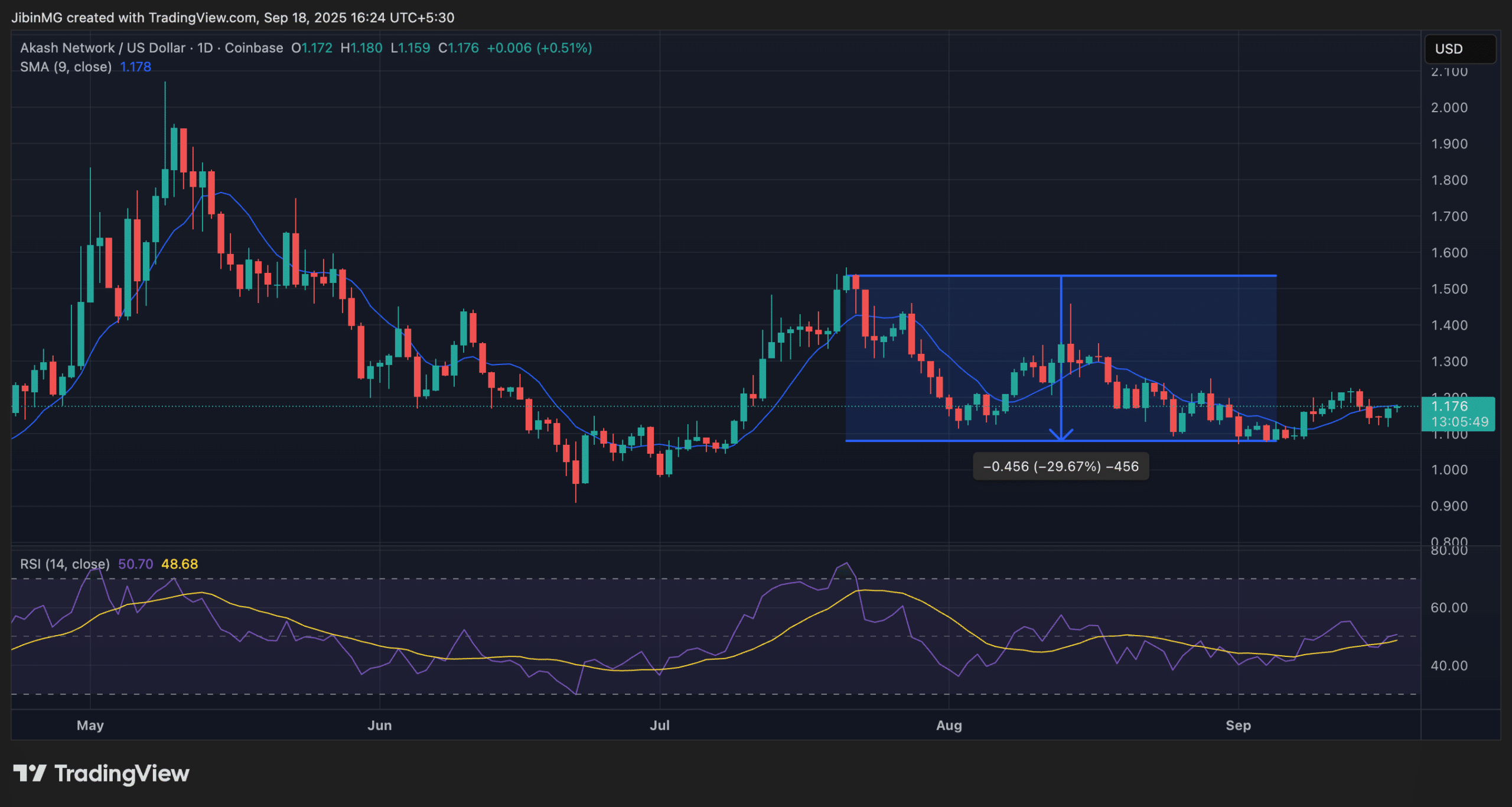
- Akash Network (AKT) – Akash has built a wide-open marketplace for all kinds of computing resources—CPU, memory, and especially the hard-to-get GPUs. As a big name in the Decentralized Physical Infrastructure Networks (DePIN) space, it works like a “reverse auction.” Users post the job they need done, and providers bid against each other to offer the lowest price. This simple competition has saved users a fortune compared to what they’d pay the big cloud companies.
Source: AKT/USD, TradingView
Can AI tokens live up to the hype?
The wild ride of AI token prices has been one of the biggest stories in crypto, with values soaring whenever the mainstream AI world makes a breakthrough. However, the market is a chaotic mix of speculation, often kicked off by news from outside the crypto world, and the slow, steady growth of people actually using these networks.
For a long time, an announcement from a company like NVIDIA was like pouring rocket fuel on AI tokens. Between January 2023 and February 2024, the value of the top AI tokens shot up 463%, while NVIDIA’s own stock climbed by 397%. However, that tight link is starting to fray.
By mid-2025, a blowout earnings report from NVIDIA didn’t automatically send AI tokens to the moon. This separation hinted that the market is growing up. Investors are now looking for real-world results, not just a good story.
Beyond the hype, real substance is starting to form. One of the biggest moves is the creation of the Artificial Superintelligence Alliance (ASI). This project is merging three major players—Fetch.ai (FET), SingularityNET (AGIX), and Ocean Protocol (OCEAN)—into one powerhouse token.
The merger is all about combining their technology, users, and resources to build a stronger foundation for decentralized AI. This isn’t just news; it’s a fundamental shift that could define the future of the entire sector.
Economics behind the AI revolution
Whether these tokens succeed or fail in the long run comes down to their tokenomics—the rules that dictate how they are created, used, and valued.
- How many coins will ever exist? Many of the top projects are designed to be scarce. Bittensor (TAO) is capped at 21 million tokens, just like Bitcoin, and even has “halving” events that cut the rate of new token creation. You can’t just buy TAO from the creators; every single token has to be earned by contributing to the network. Render (RNDR) also has a fixed supply, and its economic model directly links the number of tokens to how much the network is being used. Others, like NEAR Protocol (NEAR), use a slow, controlled inflation to pay the people who secure the network, but they also burn some fees, which could make the token deflationary if the network gets busy enough.
- Locking up tokens for security and rewards – Staking is the bedrock of these systems. It helps secure the network and pulls tokens out of the market, which can help prices. With the Internet Computer (ICP), you can lock up tokens in “neurons” to vote on the network’s future. The longer you lock them up, the more voting power and rewards you get. The Graph (GRT), which organizes blockchain data, has a complex system where different types of users stake GRT to guarantee data is accurate and earn fees for their work.
- What can you actually do with It? – A token is only as valuable as what it can buy you. RNDR is the only way to pay for jobs on its global GPU network, so as demand for AI and rendering grows, so should demand for the token. ICP tokens get burned and turned into “cycles” to pay for computing, so heavy use of the network actually shrinks the token supply. The right to vote on a project’s future also has value, as seen with Bittensor’s “Dynamic TAO” upgrade, which gave the community control over its specialized subnets.
Underdogs vs. Giants – A new battle for AI
These decentralized AI platforms are squaring up against the tech titans of cloud computing, promising to be cheaper, more private, and less controlling.
Their biggest selling point is a lower price tag. By letting anyone rent out their spare computing power, networks like Akash have shown they can offer GPUs for pennies on the dollar compared to the big guys.
But it’s not a slam dunk. Using these platforms can be tricky, demanding some know-how about crypto wallets and how the token economies work. And while these networks are designed to scale, their ability to handle the colossal jobs that big companies need is still being tested and can be bottlenecked by the speed of their own blockchains.
Risks – Navigating a high-stakes frontier
The world of AI computing tokens is an exciting, but dangerous place to invest.
- Unproven technology – These projects are built on new ideas. Figuring out how to make them grow and work together is a huge challenge.
- Wild price swings – The market is incredibly volatile, with prices often driven by social media chatter instead of actual performance.
- Shaky legal ground – AI tokens exist at the crossroads of two technologies that regulators are watching closely. The rules for AI (like the EU’s AI Act) and crypto (like MiCA) are still being written, creating a lot of uncertainty.
- Irony of centralization – For all their talk of decentralization, many projects could end up controlled by a handful of large token holders, or “whales.” Relying on normal centralized services for parts of their operation also creates weak spots.
For anyone looking to jump in, success means doing the homework to understand the tech, seeing past the hype, and having a healthy respect for the risks. The projects that survive will be the ones that build smart economic models that get people to participate and create truly resilient, decentralized systems. Those are the ones that could change the future of AI.